AIB SOUTH ASIA CONFERENCE 2027

Emerging Frontiers in International Business

The Global South

Conference Dates 11th-12th January 2027
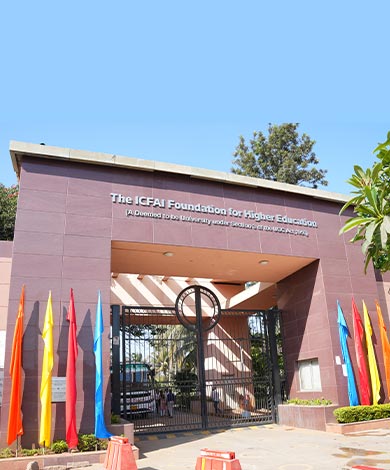
Host Institution ICFAI Foundation for Higher Education (IFHE), Hyderabad
Theme

The Global South

Emerging Frontiers in International Business

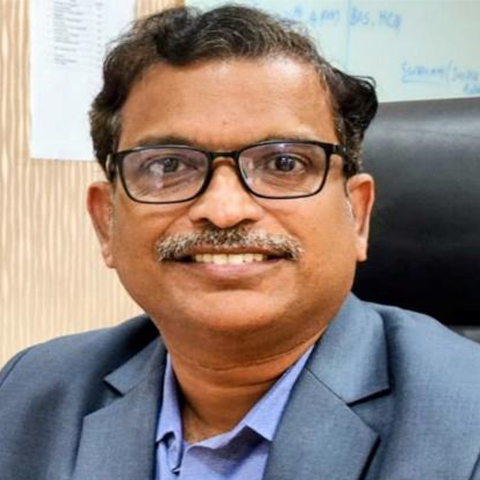
Shige Makino
Keynote Address

Shige Makino

Professor, Faculty of Economics / Graduate School of Economics, Kyoto University, Japan

Emeritus Professor, Chinese University of Hong Kong
Incoming President, Academy of International Business

Event Summary

Conference Inauguration

AIB South Asia Conference Inauguration

11th January 2027

Paper Presentations

Paper Presentations, Plenary sessions

11th-12th January 2027

Special Session

Special Session on Case Writing

12th January 2027

Paper Awards

Paper Awards Ceremony

12th January 2027

General Business Meeting

General Business Meeting & AIB South Asia Conference Valedictory

12th January 2027

About the Academy of International Business (AIB)

The AIB is a premier global community of International Business scholars. The AIB was founded in 1959 by a close-knit group of like-minded scholars looking to share the ideas and resources that would help define the emerging field of international business. The AIB has more than 3,200 members in 98 different countries around the world. Members include scholars from leading academic institutions, as well as consultants and researchers with an interest in international business. The academy also has 13 chapters established around the world, to facilitate networking as well as the facilitation and exchange of knowledge at a more local level.

About the AIB South Asia Chapter

The South Asia Chapter of the Academy of International Business (AIB) is the leading association of scholars and specialists in the field of International Business in South Asia. It organizes an annual conference, workshops, and also an International Business reading seminar.

About IFHE

About IFHE, Hyderabad

ICFAI Foundation for Higher Education (IFHE), Hyderabad, is a Category-I Autonomous, Deemed-to-be University accredited by NAAC with an A++ Grade. Established in 2008, IFHE is a multidisciplinary university with approximately 11,000 students and 500 faculty members, offering undergraduate, postgraduate, doctoral, and post-doctoral programs across management, technology, law, social sciences, and architecture.

IFHE has a strong international orientation, with academic collaborations involving universities across the United States, United Kingdom, Europe, and Australia, encompassing student and faculty exchange, joint research and teaching, conferences, and pathway programs. Its flagship ICFAI Business School (IBS) Hyderabad is AACSB accredited, and its Case Research Centre is ranked third in The Case Centre Impact Index 2025, behind Harvard and INSEAD. Its cases are used by more than 900 business schools across 80 countries.

With 1,000+ publications in Scopus, Web of Science and ABDC-indexed journals, extensive industry engagement, international research collaborations, and 17 Centres of Excellence, IFHE provides a strong academic ecosystem for advancing research, dialogue, and global collaboration in business and management.

Emerging Frontiers in International Business: The Global South

In today’s rapidly-changing geopolitical environment, nations in the Global South are assuming increasingly important roles in the global economy. Businesses based in these countries are benefitting from a variety of developments, including the expansion of South-South trade, newly-established free trade agreements with countries in both the Global North and the Global South, the demographic dividend of youth, and digital infrastructure that often surpasses that of the most developed nations.

These evolving developments have important implications for how firms based in the Global South – from MSMEs to large multinationals – engage with international markets, and how firms from the Global North do business in the increasingly-strategic Global South. The 2027 AIB South Asia Chapter conference offers the opportunity for researchers and managers to engage with the plethora of challenges and opportunities that these developments are creating, from the perspective of doing business across national borders.

Conference Tracks

The conference welcomes submissions across the following international business research tracks.

Track 01

Internationalization

This track invites submissions that consider aspects of international business in the Global South. Potential topics include firms’ strategies for inward and outward internationalization, the impact on the development of home and host countries, government response, entry modes, location choices, and similar issues pertaining to international business.

Track 02

International Entrepreneurship

Entrepreneurship is vital to economic growth. Today, entrepreneurs have the potential to connect venture capitalists in the global capital market, and there is funding available for good ideas. Papers submitted to this track can explore issues relating to various aspects of international entrepreneurship and small-firm internationalization.

Track 03

International Trade and Finance

Finance is critical for the success of international business. Firms operating across borders deal with currency fluctuations and develop strategies for hedging the associated risk. In addition, firms undertaking international business take decisions about where to source and invest funds for expanding their businesses. Papers submitted to this track will explore trade- and finance-related issues associated with international business.

Track 04

International Marketing

With rising income levels and consumer numbers, markets in the Global South are increasingly attractive, and many multinational enterprises are focusing more on these countries in order to expand their sales, using different marketing strategies and localization approaches. This track will explore marketing-related challenges of doing business in the Global South, and the strategies that firms adopt to deal with these challenges.

Track 05

Global Talent and Leadership

The inherent complexity of managing people increases when a firm operates internationally. Submissions to this track may explore any aspect of this area, including global talent management, language and cross-cultural management, global leadership, multicultural teams, expatriation, and international HR activities (e.g., recruitment, training, performance management, compensation, and leadership development).

Track 06

Sustainability

The world is facing many challenges relating to sustainability; climate change, pollution, and other factors are creating questions concerning the sustainability of current business practices, especially in the Global South. Government and civil society are asking the international business community to make changes, so that growth does not come at the cost of environmental health. The track welcomes submissions that consider these issues from a variety of disciplinary angles, including international business, development studies, economics, political science, political economy, and economic geography.

Track 07

Technological Advances and Digital Transformation

In the current era of rapid technological advancement, international business is strongly affected by technology, from knowledge-intensive sectors such as pharmaceuticals to traditional, less knowledge-intensive industries such as textiles and fast-moving consumer goods. Firms of all sizes are benefitting from technological advances; e-commerce and logistical developments allow small firms from the Global South to export to markets that were previously out of their reach. Submissions to this track will examine the role and impact of technological advances on international business.

Track 08

International Business Pedagogy

The objective of this track is to facilitate the development and dissemination of best practices for teaching international business. It provides a forum for sharing teaching-related topics and case studies, and to exchange ideas on how to attract and engage students in IB courses.

Call for Papers

The conference format is combination of competitive paper sessions, interactive paper sessions, plenary speaker sessions and workshops. We invite papers for competitive sessions, interactive sessions, and panel discussions.

We welcome three forms of submissions:
Call for Papers

Competitive Sessions

All submissions to competitive sessions must be fully-developed papers. Papers submitted to a competitive session may be accepted for a such a session or for an interactive session, depending on the quality of the paper, available space, and/or fit in the conference program. Papers accepted for competitive sessions will be presented formally, using PowerPoint. Please see additional submission guidelines below.

Interactive Sessions

Submissions to interactive sessions are typically shorter manuscripts or works-in-progress that can benefit from informal feedback from other participants. Interactive sessions are held in a roundtable discussion format and feature shorter oral presentations that allow for engaging interaction with other scholars with similar interests. Please see additional submission guidelines below.

Panel Discussion Sessions

  • Panel discussion sessions are forums for issues of contemporary interest to IB scholars. Panels are organized as a single submission by a panel chair around a common theme. Panels may have various formats – roundtable discussions, discussion with senior scholars, pro and con debates, or professional development workshops.
  • A panel session must allocate substantial time to a genuine interchange among the panelists, and between panelists and the audience. When designing the panel, keep in mind you will have 75 minutes for the session.
  • To facilitate sufficient time for genuine interchange and discussion, panels should constitute no more than four people presenting on a specific theme, and the total time for presentations should not exceed 2/3 of the total session time (i.e., 50 mins for a 75-minute session).
  • Panel submissions that simply feature a series of paper presentations will be rejected.
  • We recommend the following approach when developing the panel:
    • Identify a theme and create a detailed abstract that summarizes the theme and issues the panel aims to address;
    • Recruit scholars or other experts and request they identify thematic topics that are consistent with the abstract;
    • Based on the identified topics, create a program that is coherent, meaningful and which follows a logical order of the expected presentations and discussion;
    • Request panelists to present and discuss their topics accordingly;
    • Request each panelist to formulate at least two questions that they would like to ask one or more other panelists about their topic, during the panel discussion;
    • The chair or other participant might serve as moderator or timekeeper to keep the panel on track and ensure sufficient time for substantive interaction and discussion.
  • This approach is intended to create a panel that features substantial discussion and Q&A among the panelists and with the audience, comprising a significant portion of the total session time.
  • Please see additional submission guidelines below.

Additional Guidelines

Additional guidelines for submissions to competitive sessions and interactive sessions

Papers must be fewer than 12,000 words inclusive of all materials, including appendices and references. Papers exceeding these limits may be returned to the author(s).

Papers must contain no information that identifies the author(s) on the title page or elsewhere in the document. Submitters should clean the paper’s File Properties to remove identifying information.

Papers must follow the JIBS Style Guide.

Submissions that consist only of abstracts, extended abstracts, or research proposals will not be accepted.

Guidelines for Submissions to Panel Proposals

Panel proposals should be no more than 6,000 words inclusive of all materials, and must be submitted by the panel chair. All panel proposals must include:

Title Page

A title page that includes the panel name, the session format (e.g., pro and con debate, moderated round table discussion, keynote and commentary, professional development workshop, etc.) and the panel participants.

Panel Participants

The name, affiliation, email address, and role of each participant in the panel (chair, discussant, and/or panelist). All panelists listed in the submission must appear and present at the conference. Each panel must specify a chair. A second chair and/or a discussant are optional.

Detailed Overview

A detailed overview of the main issue(s) addressed or arguments to be made in the panel.

Technical Setup

Any special technical setup that the panel may require (if beyond a standard video conferencing setup: i.e., need for breakouts, polling, and other advanced features). The feasibility of any special requirements will be part of the evaluation criteria.

Participant Confirmations

Copies of emails or letters from each participant stating they agree to participate in the panel if the proposal is accepted. Failure to include these confirmations will count against the proposal.

General Rules for All Submissions

All submissions to the conference must have a focus on international phenomena.

All submissions must be in English.

Each submission must state on its front page at the top right, the requested track (number and title) and the session format (competitive, interactive, or panel discussion).

Each submission must include an abstract, not to exceed 200 words, that summarizes the manuscript or panel discussion. This abstract will appear in the Conference Proceedings, if your submission is accepted to the conference.

Only submissions made through our official online submission portal will be reviewed for potential inclusion in the conference. Only PDF and Word files will be accepted.

Authors will be notified about the acceptance of their paper(s) via email, after which the process of registration will begin.

Each author is allowed a maximum of three submissions, irrespective of their position in the author list.

For any issues not addressed in this submission guidelines, please contact

aibsa@ifheindia.org

An Introduction to Case Writing

The ICFAI Business School (IBS) Case Research Center is one of the world’s premier case development groups. Ranked third in The Case Centre’s Impact Index 2025—just behind Harvard and INSEAD—it is home to eight globally-renown case writers, six of whom are among the Top 10 bestselling authors worldwide. The center’s work has reached in excess of 900 business schools in more than 80 countries, and earned close to 200 prestigious awards.

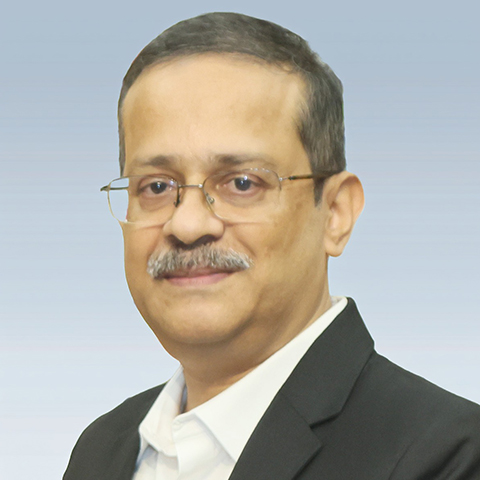
This plenary session will offer conference attendees the opportunity to learn from Prof. Sanjib Dutta, Director of the Case Research Center, about writing useful and impactful case studies.

Prof. Sanjib Dutta Director, Case Research Center
Professor Sanjib Dutta

Registration Fees

  • Note: To participate in the AIB South Asia Conference 2027, it is mandatory to have a valid AIB membership though January 12th, 2027.
  • To become an AIB member, kindly register at: https://www.aib.world/membership/new-members/ and obtain your AIB membership ID.
  • To renew your AIB membership, https://www.aib.world/membership/renewing-members/ (Note: 1-3 business days is standard for the processing of an AIB membership after submission.)
  • Registration for the AIB South Asia Conference will be confirmed only after the payment of the registration fee.

Doctoral Students / Research Scholars

Delegates from South Asian countries and other Low- and Lower-Middle Income economies
Early-bird before 1st December 2026
INR 3000
Regular
INR 4000
Delegates from other parts of the world
Early-bird before 1st December 2026
USD 70
Regular
USD 80

Industry Practitioners

Delegates from South Asian countries and other Low- and Lower-Middle Income economies
Early-bird before 1st December 2026
INR 8000
Regular
INR 9000
Delegates from other parts of the world
Early-bird before 1st December 2026
USD 140
Regular
USD 160

Potential Publication Opportunities

All of the abstracts of papers accepted for the conference will be published as a digital compilation. In addition, we are planning to produce an edited book on the topic of the conference theme, working with a leading academic publisher; the volume will include selected papers presented at the conference

Registration fee is non-refundable, and includes access to all plenary sessions, paper presentations, and the Junior Faculty Consortium, and is also inclusive of meals (tea, breakfast and lunch). Participants are requested to remit the necessary registration charges. After remittance, kindly send the screenshot of the bank transaction reference number to aibsac@iimb.ac.in/ WhatsApp: +91 6380338272

Best Paper Awards

The best paper in each track will be recognized and awarded a certificate.

In addition, the conference has instituted best paper awards (winner/ runner up) in select tracks.

Key dates and Information

Paper Submission Window 15 Sep – 30 Oct 2026
Last Date for Paper Submission 30 October 2026
Notification of paper acceptance decisions 15 November 2026
Last date for early-bird registration 30 November 2026
AIB South Asia 2027 conference 11th-12th January 2027

Conference Committee

Conference Chair

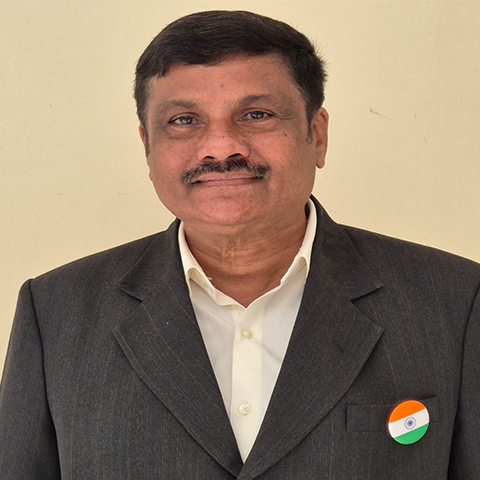
Elizabeth-Rose

Elizabeth L. Rose

ICFAI Foundation for Higher Education

elizabeth.rose@ifheindia.org

Conference Chair

raghunath-s

S. Raghunath

Indian Institute of Management Bangalore

Conference Convener

Prof-Sita

Sitamma Mikkilineni

ICFAI Foundation for Higher Education

sita@ibsindia.org

Conference Committee

CS-Shylajan

Shylajan CS

ICFAI Foundation for Higher Education

Tamma-Koti-Reddy

Tamma Koti Reddy

ICFAI Foundation for Higher Education

Venu-Gopal-Rao

Venugopal Rao

ICFAI Foundation for Higher Education

Gaurav-Kumar

Gaurav Kumar

XLRI

Manisha-Badetia

Manisha Badetia

ICFAI Foundation for Higher Education

Conference Manager

AIB South Asia Chapter

Ms. Shankari Chidambaram

Phone: +91 6380338272 / +91 9500032495 Email: aibsac@iimb.ac.in Web: https://aib-southasia.org/