

ICACIML - 2026 Program Schedule
Day 1: March 26, 2026 |
|||
|
Time |
Event |
Details |
Venue |
|
09:15 AM – |
Registration |
Participant Check-in |
Gate-2, FST, IFHE |
|
10:00 AM – |
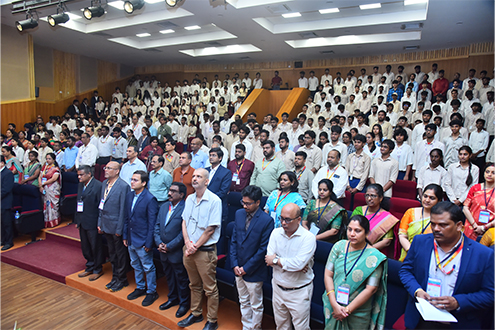
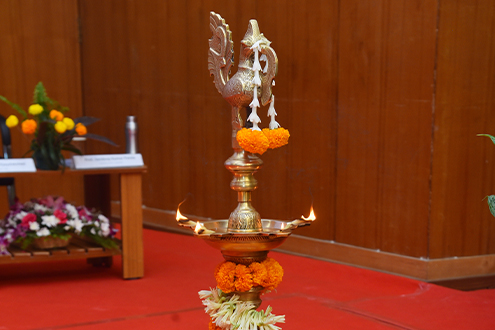
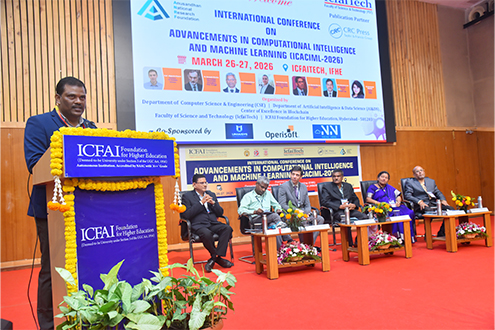
Inauguration |
Welcome Address, Conference Opening. |
Auditorium, IBS |
|
11:00 AM – |
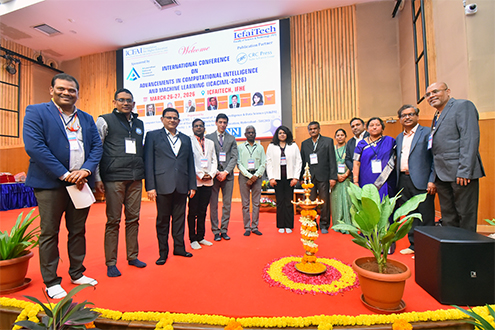
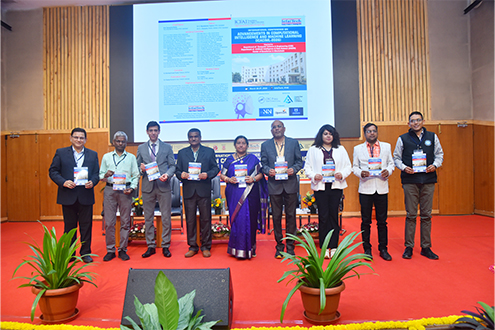
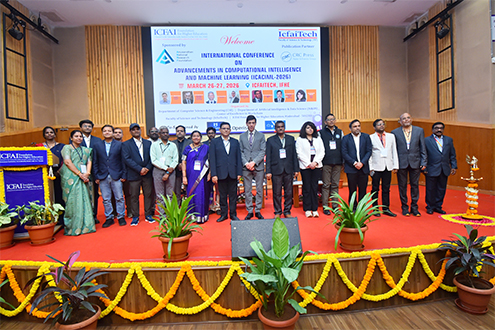
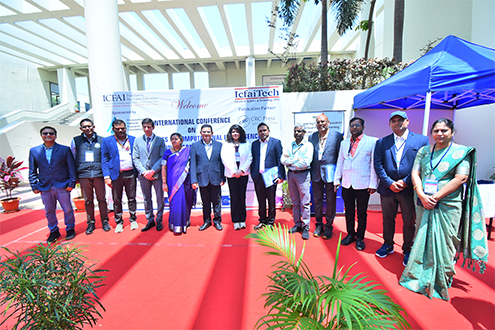
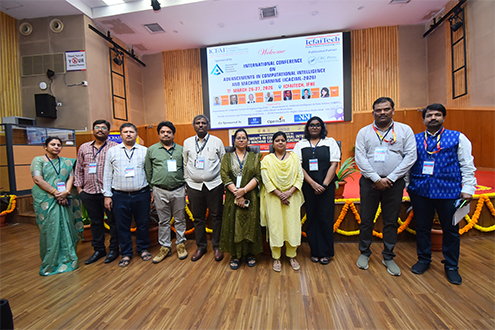
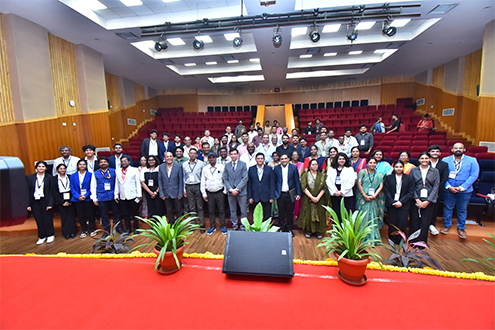
Group Photo & High Tea |
Dome Area, FST |
|
|
11:15 AM – |
Keynote |
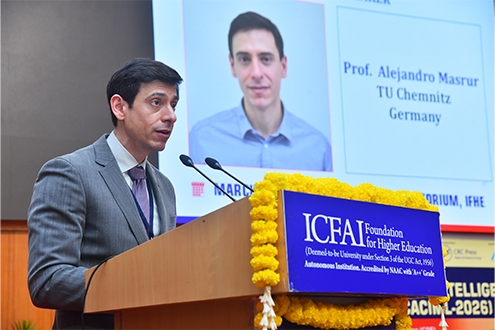
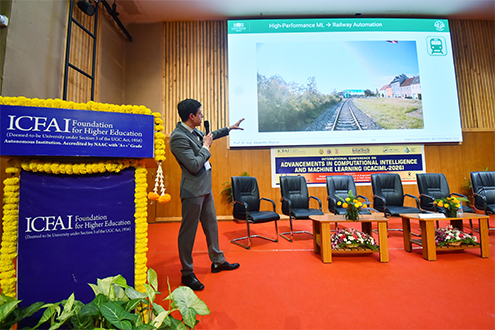
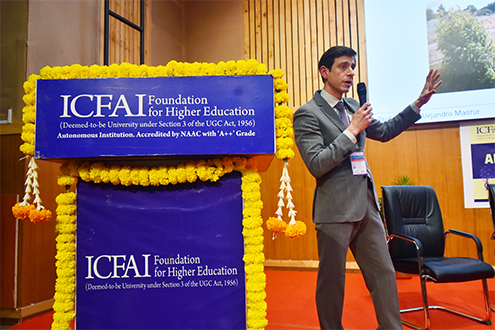
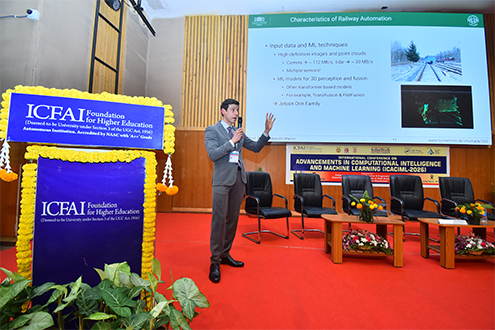
Prof. Alejandro Masrur, TU Chemnitz, Germany, |
Auditorium, IBS |
|
12:00 Noon |
Keynote |
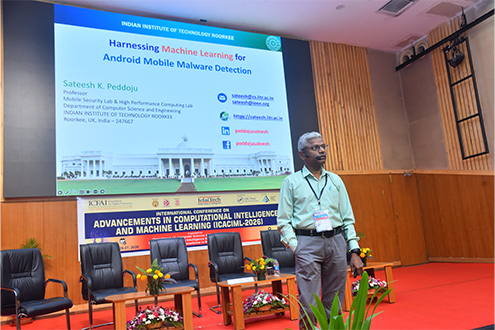
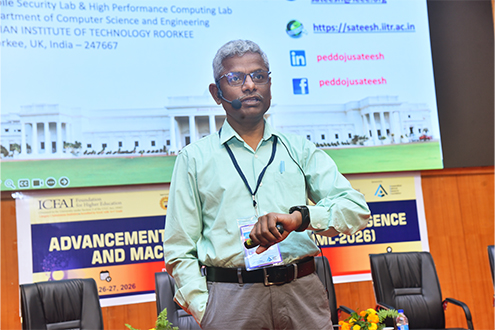
Prof. P. Sateesh Kumar, Dept. of CSE, IIT-Rookee, |
Auditorium, IBS |
|
12:45 PM – |
Lunch |
Dome Area, FST |
|
|
02:00 PM – |
Keynote |
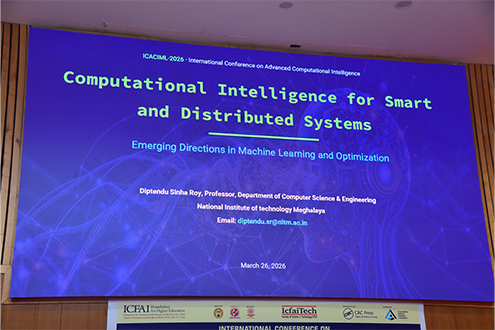
Prof. Diptendu Sinha Roy, NIT Meghalaya |
Auditorium, IBS |
|
02:45 PM – |
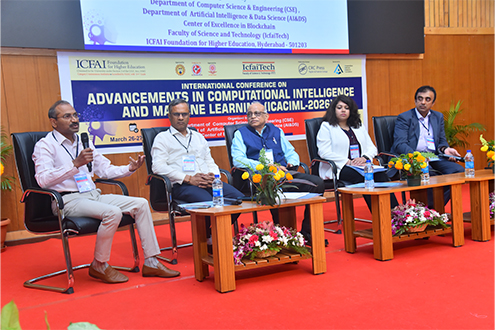
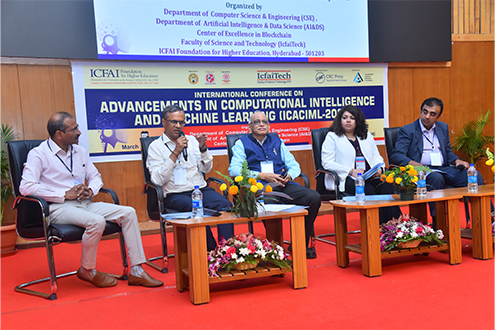
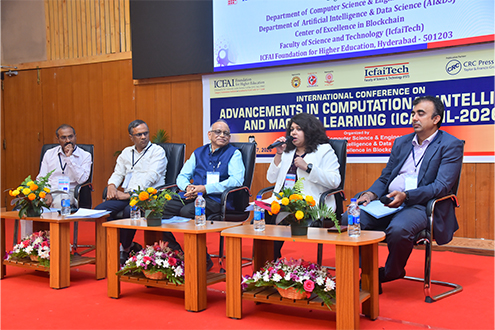
Industry Panel Discussion |
Moderator:
|
Auditorium, IBS |
|
03:30 PM – |
High Tea |
Dome Area, FST |
|
|
03:30 PM – |
Technical |
Parallel Technical Tracks 1 – 3 |
FST Labs |
|
03:45 PM – |
Keynote |
Prof. Subhendu Ku. Pani, Principal, KEC,
|
Auditorium, IBS |
|
04:30 PM – |
Keynote |
Ms. Swarnamouli Majumdar, CEO / Founder, |
Auditorium, IBS |
|
05:00 PM – |
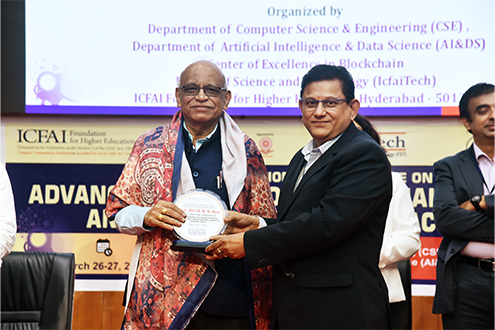
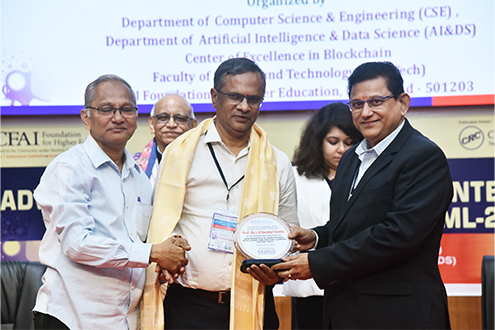
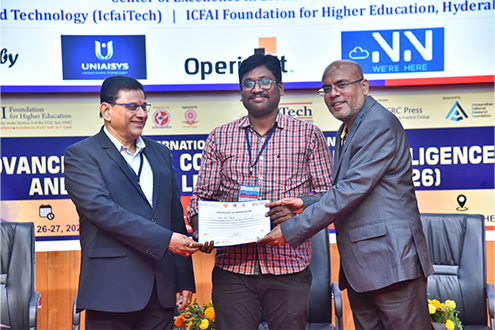
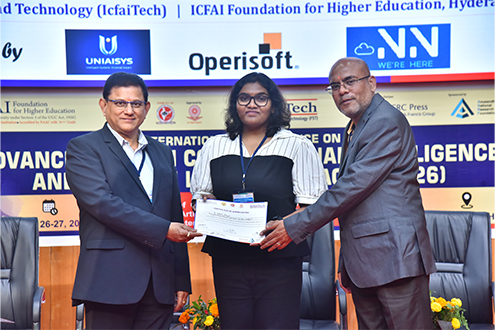
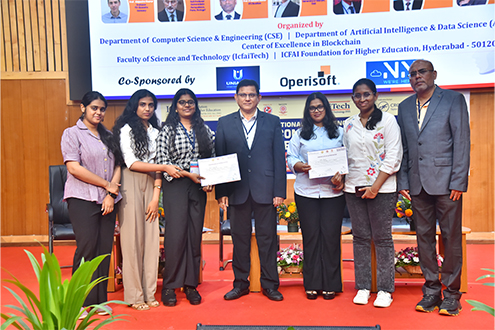
Certificate Distribution |
Closing of Day 1 |
Auditorium, IBS |
Day 2: March 27, 2026 |
|||
|
Time |
Event |
Details |
|
|
09:45 AM – |
Welcome Address |
Conference Convener |
|
|
10:00 AM – |
Keynote |
Prof. Fernando Moreira, Universidade Portucalense (UPT), Porto,
|
|
|
10:45 AM – |
Keynote |
Prof. (Dr) Bouzian Brik , Assoc. Prof., atSharjah
university, UAE. |
|
|
11:30 AM – |
Tea |
||
|
11:45 AM – |
Technical |
Parallel Technical Tracks 1– 6, FST Labs |
|
|
01:00 PM – |
Lunch |
||
|
02:00 PM – |
Technical |
Parallel Technical Tracks 1– 6, FST Labs |
|
|
03:30 PM – |
High Tea |
||
|
03:45 PM – |
Valedictory |
Closing of ICACIML2026, Auditorium, IBS. |
|
Parallel Technical Track Venue |
|||
|
Track ID |
Venue |
||
|
Track 1 |
LIVIA Lab, Room: G-11, Ground Floor |
||
|
Track 2 |
VLSI Lab, Room: G-25, Ground Floor |
||
|
Track 3 |
LART Lab, Room: R-118, First Floor |
||
|
Track 4 |
Logic Loop Lab, Room: R-104, First Floor |
||
|
Track 5 |
LLOCK Lab, Room: R-221, Second Floor |
||
|
Track 6 |
Syntax Studio, Room: R-211, Second Floor |
||
Delegates Technical Presentation Schedule
S. no. |
Date |
Track ID |
Paper ID |
Paper Title |
Corresponding Author |
Time |
Venue |
1 |
26th March 2026
Technical Session – I |
1 |
24 |
A Novel Study on Applications of ML Techniques on Predicting Influences of Social Media Interactions on Academic Stress Caused to Students. |
UPASANA SINHA, et.al., |
03:30 PM– 03:45 PM |
LIVIA Lab, Room: G - 11, Ground floor |
2 |
23 |
Real-Time Crowd Detection, Density Estimation, And Predictive Stampede Detection Using Deep Learning |
Dr. Upasana Sinha, et.al., |
03:45 PM– 04:00 PM |
|||
3 |
102 |
User Reviews Classification Using Long Short-Term Memory Networks On The Amazon Reviews Dataset |
Thati Ravi Prasad, et.al., |
04:00 PM– 04:15 PM |
|||
4 |
129 |
Hisab Kitab: Student Budget Planner With ML Integration |
P. Sree Lakshmi, et.al., |
04:15 PM– 04:30 PM |
|||
5 |
118 |
Preparing For The Quantum Future: Legal Risks, Policy Responses And International Regulatory Perspectives |
Dr. D. Sheila Rani, et, al., |
04:30 PM– 04:45 PM |
|||
6 |
2 |
ICACIML _AMP_03 |
AI-Integrated Framework for Autonomous Vehicular and UAN Networks in Next-Generation Mobility Systems |
Mohammed Akifuddin Ghori, et. al., |
03:30 PM– 03:45 PM |
VLSI Lab, Room: G - 25, Ground floor |
|
7 |
ICACIML _AMP_04 |
Applying Artificial Intelligence to Software-Defined Networking and Network Function Virtualization |
Mohammed Abdul Raheem, et. al., |
03:45 PM– 04:00 PM |
|||
8 |
95 |
Cross-Platform Implementation in Pikeos: A Study of Separation Kernels and POSIX Interfaces |
Rakesh Kumar Donthi, et. al., |
04:00 PM– 04:15 PM |
|||
9 |
165 |
An Intelligent Animal Repellent IOT System for Farms |
E Sudarshan, et. al., |
04:15 PM– 04:30 PM |
|||
10 |
55 |
“Forensic Technological Advancements, Including Artificial Intelligence and Their Transformative Impact on India's Criminal Justice System: Opportunities, Challenges and Reforms” |
Dr. D. Sheila Rani, et, al., |
04:30 PM– 04:45 PM |
|||
11 |
3 |
94 |
Educareerprep – Bridging Academiaa and Career |
Pasham Avinash Yadav, et.al., |
03:30 PM – 03:45 PM |
LART Lab, Room: R-118, First Floor |
|
12 |
137 |
Machine Learning for Healthcare & Biomedical Applications: Privacy-Preserving IoMT Security, Federated Learning, And Explainable AI |
Guda Rishikeshwar Reddy, et.al., |
03:45 PM– 04:00 PM |
|||
13 |
211 |
An Ensemble Feature Selection and Soft Voting Classifier Framework for Breast Cancer Prediction |
Alakananda Tripathy, et.al., |
04:00 PM– 04:15 PM |
|||
14 |
167 |
A Comprehensive Survey on Real-Time Event Detection for Public Safety Using NLP & Deep Learning |
Prashanth Bolukonda, et.al., |
04:15 PM– 04:30 PM |
|||
15 |
44 |
A Hybrid Quantum Classical Neural Network for EEG-Based Eye State Classification |
Dr Kavitha Soppari, et, al., |
04:30 PM– 04:45 PM |
|||
16 |
84 |
Blood Group Prediction from Fingerprint Images Using Modified Resnet-18 CNN |
Aditi A, et. al., |
04:45 PM - 05:00 PM |
|||
17 |
27th March 2026
Technical Session – II
|
1 |
ICACIML _Amp_01 |
Transpiration Crop Yield Impact and Intelligent Weed Density Analysis Via Artificial Intelligence |
Sushanta Meher, et. al., |
11:45AM - 12:00 Noon |
|
18 |
ICACIML _Amp_05 |
Bridging Discrete Mathematics and AI: Algebraic Structures as Priors for Neuro-Symbolic Learning |
Laxmi Bhavani Cheekatimalla, et. al., |
12:00 Noon – 12:15 PM |
|||
19 |
ICACIML _Amp_06 |
Signal Extraction Using Custom Signal Signature Correlation: A Wavelet Approximation |
S S V N S Unnathi, et. al., |
12:15 PM – 12:30 PM |
|||
20 |
06 |
Band-Gap Prediction Using Machine Learning: A Brief Overview |
Shakira, et. al., |
12:30 PM – 12:45 PM |
|||
21 |
19 |
AI-optimized hybrid RF/FSO communication for secure smart grids and EV infrastructure |
Sunihta Dharnsa, et. al., |
12:45 PM – 01:00 PM |
|||
22 |
2 |
85 |
A Comparative Analysis of Hybrid Machine Learning Models for Land Use Change Detection in Cloud-Based Cellular Automata Frameworks |
Naba Kumar Rath, et, al., |
11:45AM - 12:00 Noon |
||
23 |
91 |
Hybrid Classification Approach for Enhanced Software Defect Prediction |
Dr. Santosh Kumar Kar, et, al., |
12:00 Noon – 12:15 PM |
|||
24 |
113 |
Dynamic Adaptive Traffic Signal Control System Using Computer Vision |
Srija Reddy Bobbala et, al., |
12:15 PM – 12:30 PM |
|||
25 |
126 |
Tree-based Models and Feature Ablation for Yoga Pose Classification |
Malay Tripathi, et, al., |
12:30 PM – 12:45 PM |
|||
26 |
130 |
A Deep Reinforcement Learning–Based Adaptive Routing Protocol for Mobile Ad Hoc Networks |
Dr. P. CHIRANJEEVI, et, al., |
12:45 PM – 01:00 PM |
|||
27 |
3 |
49 |
DATA-DRIVEN COMPETENCY ASSESSMENT AND CANDIDATE PROFILING |
PREETY SINGH et. al., |
11:45AM - 12:00 Noon |
||
28 |
159 |
Resume-Job Matching Using Semantic Embeddings and Multi-Field Feature Interaction |
M Amarendhar Reddy, et. al., |
12:00 Noon – 12:15 PM |
|||
29 |
166 |
A Portable ECG-Based Early Cardiac Arrest Detection and Monitoring System with Mobile Integration |
E.Sudarshan, et. al., |
12:15 PM – 12:30 PM |
|||
30 |
172 |
Bone Fracture Detection |
Nuthula Satwika, et. al., |
12:30 PM – 12:45 PM |
|||
31 |
198 |
Graph Representation Learning for Structural Pattern Discovery in the AlphaFold E. coli Proteome |
Uttam Kumar Jena, et. al., |
12:45 PM – 01:00 PM |
|||
32 |
27th March 2026 Technical Session – II
|
4 |
79 |
Ethical and Regulatory Governance of AI-Assisted Medical Decision Systems |
Venkata Reddy Medikonda, et. al., |
11:45AM - 12:00 Noon |
|
33 |
10 |
Cyber Threats Monitoring Framework for Women Safety in Social Media Platforms. |
C.Madhu Sudhakar, et. al., |
12:00 Noon – 12:15 PM |
|||
34 |
80 |
Exploring the potential of artificial intelligence and deep learning in medical imaging |
Arun Kumar Arigela, et. al., |
12:15 PM – 12:30 PM |
|||
35 |
66 |
Optimized FISH Method for Bacterial Species Detection |
L. Chandhu, et. al., |
12:30 PM – 12:45 PM |
|||
36 |
34 |
MRI-Based Diagnostic Framework for Early Ankylosing Spondylitis Detection |
B. Sri Lasya, et. al., |
12:45 PM – 01:00 PM |
|||
37 |
5 |
01 |
Deep Learning and Color-Coded Visualization for Alzheimer’s Disease Diagnosis: A Comprehensive Literature Review |
SANGEETHA SINGARAPU, et. al., |
11:45AM - 12:00 Noon |
||
38 |
05 |
A CNN-Driven Feature Extraction Approach for Supervised Network Intrusion Detection |
Sudhanshu Sekhar Tripathy, et. al., |
12:00 Noon – 12:15 PM |
|||
39 |
31 |
Phishing Website Detection Using Machine Learning |
Gundre Harini, et. al., |
12:15 PM – 12:30 PM |
|||
40 |
35 |
Intrusion Detection System using Machine Learning and Deep Learning Algorithms: A Survey |
Songa Ratalu, et. al., |
12:30 PM – 12:45 PM |
|||
41 |
36 |
Heart Disease Prediction using Machine Learning |
Varchasv Sharma, et. al., |
12:45 PM – 01:00 PM |
|||
42 |
6 |
28 |
AI Based Technique for Language Translation: Breaking the Communication Barriers |
Kondagoni Namitha Sri, et. al., |
11:45AM - 12:00 Noon |
||
43 |
64 |
NutriLens.AI - AI-Powered Food Logging & Recommendations |
Md. Rahman Uddin, et.al., |
12:00 Noon – 12:15 PM |
|||
44 |
133 |
Multilingual NLP for Low-Resource Indian Languages using Transfer Learning and Parameter-Efficient Fine-Tuning |
Pola Shivani, et. al., |
12:15 PM – 12:30 PM |
|||
45 |
127 |
Unlocking the potential of Cryptographic Techniques for Resouces- Constarined IoT Networks |
Nayancy, et. al., |
12:30 PM – 12:45 PM |
|||
46 |
147 |
Hybrid ViT-CNN Framework for Real-Time IoT Facial Authentication with Spoof Detection |
Bandhan Panda, et. al., |
12:45 PM – 01:00 PM |
|||
47 |
27th March 2026 Technical Session – III
|
1 |
54 |
Delay And Power Optimization in Domino Logic Circuits Using Logical Effort Technique |
Deep Chandra Upadhyay, et. al., |
02:00 PM – 02:15 PM |
|
48 |
60 |
Multi-Scale Hybrid CNN Vision Transformer for Fine-Grained Indian Dish Classification |
Nidhi Verma, et. al., |
02:15 PM – 02:30 PM |
|||
49 |
135 |
AI-Powered Youtube Video Summarizer With Interactive Question Answering |
Mitta Sushma, et, al., |
02:30 PM – 02:45 PM |
|||
50 |
20 |
AI-Enabled Joint Optimization of 6G Cognitive Radio QoS and Hybrid Microgrid Energy Efficiency |
Kummari Jayasri, et. al., |
02:45 PM – 03:00 PM |
|||
51 |
2 |
132 |
A Deep Learning Framework For Automated Stroke Detection Using CT Neuro-Imaging |
Tellamalla Vijay Sekhar, et, al., |
02:00 PM – 02:15 PM |
||
52 |
141 |
Real-Time Web Spoofing Detection Using Machine Learning Techniques |
J Sri Sai Nikhil, et, al., |
02:15 PM – 02:30 PM |
|||
53 |
148 |
POLYGUARD: A Policy-Constrained NL→Database Agent for Safe SQL and NoSQL Access |
Dr. K. Kishore Kumar, et, al., |
02:30 PM – 02:45 PM |
|||
54 |
155 |
Achieving Efficient Object Detection through Data Refinement and Model Optimization |
Neha Aggarwal, et, al., |
02:45 PM – 03:00 PM |
|||
55 |
81 |
CodeSnap-An AI Based Learning Platform for Code Debugging |
Chikli Shivaji Rao, et. al., |
03:00 PM – 03:15 PM |
|||
56 |
3 |
199 |
Few Deep Learning-Driven Shot Recognition for Endangered Species Classification in Wildlife Images |
Tejinder kaur, et. al., |
02:00 PM – 02:15 PM |
||
57 |
200 |
Hybrid Crop Prediction Model with Live Weather Integration and Explainable AI |
Penta Srinika, et. al., |
02:15 PM – 02:30 PM |
|||
58 |
201 |
Musical Genres classification Using Deep Networks Trained on Audio Spectrograms |
Jarpula Ankitha, et. al., |
02:30 PM – 02:45 PM |
|||
59 |
202 |
SMART CITY TRANSPORTATION DEEP LEARNING ENSEMBLE APPROACH FOR TRAFFIC ACCIDENT PREDICTION AND DETECTION |
S.Srijani, et. al., |
02:45 PM – 03:00 PM |
|||
60 |
197 |
Smart Wireless EV Charging Using IoT-Driven Hybrid Energy and Intelligent Source Selection |
uttam kumar jena, et. al., |
03:00 PM – 03:15 PM |
|||
61 |
27th March 2026 Technical Session – III
|
4 |
171 |
Evaluating Post-Quantum Cryptography in Cooperative Relaying–Based Cyber-Physical Systems |
Siva Padmini, et. al., |
02:00 PM – 02:15 PM |
|
62 |
83 |
Family-Resilient Brain Health: Merging Multigenerational Caregiving Challenges and AI-Personalized Lifestyle Dementia Prevention |
KISHORE KUMAR KAMARAJUGADDA |
02:15 PM – 02:30 PM |
|||
63 |
134 |
AI-DRIVEN EARLY IDENTIFICATION AND MONITORING OF ALZHEIMER'S DISEASE |
Dayya Sri Varsha, et. al., |
02:30 PM – 02:45 PM |
|||
64 |
ICACIML _AMP_02 |
A Hybrid Blockchain-ML based Intrusion Detection System |
Sudhir Kumar Senapati, et. al., |
02:45 PM – 03:00 PM |
|||
65 |
203 |
SmartEyeX:OCT And Fundus-Based Deep Learning System For Multi-Level Eye Disease Diagnosis And Analysis |
Meghana Bommisetty, et. al., |
03:00 PM – 03:15 PM |
|||
66 |
5 |
ICACIML _AMP_10 |
Retinal Image Segmentation and Disease Grading Using Trans-former-Based Deep Neural Networks |
Ch. Rama Ashta Lakshmi, et. al., |
02:00 PM – 02:15 PM |
||
67 |
46 |
Vision Transformer as a Standalone Encoder for Melanoma Segmentation |
Dr. V. Vijayaraghavan, et. al., |
02:15 PM – 02:30 PM |
|||
68 |
63 |
Multimodal Medical Assistance for Explainable Alzheimer’s Diagnosis |
Mr. M. Krishna Kishore, et. al., |
02:30 PM – 02:45 PM |
|||
69 |
125 |
Blockchain-Powered Patient Authentication in Healthcare using QR Codes on Electronic Health Records |
Mohammad Waseem, et. al., |
02:45 PM – 03:00 PM |
|||
70 |
51 |
Explainable Edge-Enabled Federated Learning Framework for Early Alzheimer’s Disease Detection from MRI Data |
P. ROHINI, et. al., |
03:00 PM – 03:15 PM |
|||
71 |
6 |
ICACIML _AMP_11 |
Cross-Platform Sentiment Mining using Machine Learning |
Amrita Sarkar, et. al., |
02:00 PM – 02:15 PM |
||
72 |
ICACIML _AMP_12 |
A Comparative Study of Machine Learning Algorithms for Anomaly-Based Sensor Node Failure Detection in WSN |
Amit Kumar Keshari, et. al., |
02:15 PM – 02:30 PM |
|||
73 |
123 |
Auto-Weighted and Stacked Ensemble Models for User Retention Analysis on a Netflix-Style Synthetic Dataset |
Rachana Chinnapa reddy Gari, et.al., |
02:30 PM – 02:45 PM |
|||
74 |
143 |
A Comprehensive Survey on Vision-Language Models for Personalized and Health-Aware Food Recommendation |
P. Srinivasa Rao, et. al., |
02:45 PM – 03:00 PM |
|||
75 |
21 |
Quantum-resistant and privacy-preserving security framework for industrial IoT using federated learning and blockchain trust |
Venkata Reddy Medikonda, et. al., |
03:00 PM – 03:15 PM |

Advancing the Frontiers of Computational Intelligence
- Encouraging cutting-edge research and novel methodologies in computational intelligence, spanning neural networks, evolutionary algorithms, fuzzy systems, and hybrid intelligent models.
- Exploring transformative applications of AI and ML in diverse sectors such as healthcare, finance, cybersecurity, robotics, smart cities, agriculture, and industrial automation.
- Bringing together researchers, academicians, industry professionals, and practitioners to exchange ideas, share expertise, and promote meaningful cross-domain collaborations.
- Deepening the understanding of core theoretical foundations, including mathematical models, learning algorithms, optimization strategies, and computational frameworks that drive next-generation AI systems.
- Promoting informed discussions on responsible and ethical AI, with emphasis on fairness, transparency, interpretability, security, and the broader socio-ethical implications of intelligent technologies.
- Providing a dynamic platform for students and early-career researchers to present their work, receive constructive feedback, and cultivate strong professional and research networks.”
ICFAI Foundation for Higher Education (IFHE)
- The ICFAI Foundation for Higher Education is a deemed-to-be-university established under Section 3 of the UGC Act, 1956.
- IFHE's comprehensive student-centric learning approach provides relevant knowledge, imparts practical skills, and inculcates a positive attitude among the students.
- Today, the IFHE is one of the largest multi-disciplinary universities in the country.
- The ICFAI Business School, Faculty of Science and Technology, Faculty of Law , ICFAI School of Architecture, ICFAI School of Social Sciences and Center for Distance and Online Education are the six core academic schools of the university
- IFHE has been permitted by the Ministry of Education, Government of India, to start an Off-Campus Center at Bangalore, Karnataka.
- The University is a member of the Association of Indian Universities (AIU) and the Association of Commonwealth Universities (ACU).
- The University offers students the best and updated curriculum and trains them for rewarding careers.
- It promotes a culture of research that advances knowledge in the field of management, technology, law, architecture, and social sciences.
- IFHE is a Category I Autonomous Institution, and Accredited by NAAC with 'A++' Grade
Faculty of Science and Technology (IcfaiTech)
Faculty of Science and Technology (IcfaiTech), Hyderabad, is a constituent of the ICFAI Foundation for Higher Education. It has been established to promote quality education in the field of Science and Technology. IcfaiTech strives to acquire a reputation as a highly purposeful and innovative institution, setting the pace for workable reforms in professional education that are suitable and most relevant to the Indian cultural milieu.
The core philosophy of education at IcfaiTech is to empower students with the proper knowledge and modern skill sets, so that they are ready to face the challenges of the competitive world. IcfaiTech strives to provide its students with the fine edge required to make a successful professional. The programs at IcfaiTech have been uniquely designed by incorporating courses from diverse areas, including humanities, arts, and management, combined with science, engineering, and industry- based internships. IcfaiTech ensures that students gain exposure and knowledge across different disciplines, develop inter-personal skills and leadership qualities that take them beyond traditional thinking and practice.
The educational philosophy and practices at IcfaiTech allow it to integrate an innovative and emerging body of knowledge into its learning system. The highlights of the academic program are summarized below:
- Cutting-edge course curriculum with contemporary and effective pedagogic methods that emphasize application-oriented learning.
- Encouraging students to not only articulate Science and Technology needs but also provide appropriate solutions.
- Developing appreciation for synthesized multidisciplinary learning by way of workshops, internships, and other group learning assignments
Computer Science & Engineering (CSE) and Artificial Intelligence & Data Science (AI&DS) Departments
The Department of Computer Science & Engineering (CSE) and Artificial Intelligence & Data Science (AI&DS) are research-focused academic unit committed to excellence in advanced computing and intelligent technologies. The two departments collectively offer B.Tech. (CSE, CSE-Cloud Computing, CSE-Cybersecurity, CSE- Blockchain, Cybersecurity, IoT), B.Tech. (AI, AI-DS, AI-ML), and M.Tech. (AI-ML), BCA (AI-ML, AI-DS), B.Sc. (CS/DS), and a strong Ph.D. program that nurtures high- impact research. With a distinguished team of 60+ highly qualified faculty members, comprising professors, researchers, and industry practitioners with diverse expertise in AI/ML, deep learning, NLP, cybersecurity, Blockchain technologies, IoT, cloud computing, distributed systems, high-performance computing, and intelligent data-driven applications. The department drives innovation through strong research contributions and industry collaborations. A vibrant community of 4000+ students enriches a dynamic ecosystem of learning and problem-solving. Modern laboratories, research centers, and incubation facilities support hands-on exploration, applied research, and product development. The department's consistent publications in SCI/Scopus venues and interdisciplinary initiatives position it as a leading hub for emerging technologies and future-ready talent.
Key Department Initiatives
- Organizes national and international conferences, seminars, workshops, and technical conclaves in emerging areas such as AI, Data Science, Cybersecurity, Blockchain, and Cloud Computing.
- Publishes high-quality research articles, book chapters, patents, and technical reports in collaboration with faculty, scholars, and students.
- Collaborates with industry partners, research laboratories, professional bodies, and global organizations to promote joint projects, internships, certifications, and skill development programs.
- Conducts training programs, coding boot camps, hackathons, and hands-on workshops to strengthen practical skills in AI, ML, IoT, full-stack development, and data analytics.
- Encourages student and faculty participation in multidisciplinary projects, innovation challenges, and funded research initiatives that address real-world problems.
- Promotes entrepreneurship, start-up culture, and product innovation through incubation support, ideation camps, and mentoring by industry experts.
Centre of Excellence in Blockchain
The Center of Excellence in Blockchain at the Faculty of Science and Technology (IcfaiTech) aims to drive high-impact research in Blockchain, smart contracts, and distributed ledger technologies, while fostering innovation through patents, publications, and funded projects. It leverages state-of-the-art labs and industry-grade platforms to support experimental research, strengthens collaborations with industry and academic partners for joint development, and nurtures skilled researchers through mentoring, specialized training, and hands-on learning opportunities.
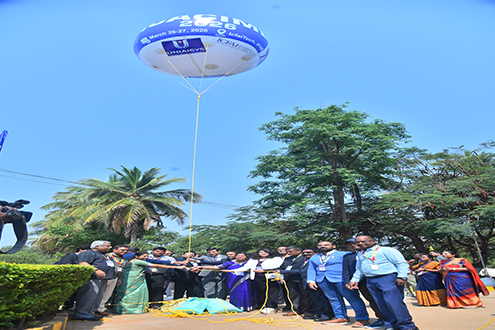
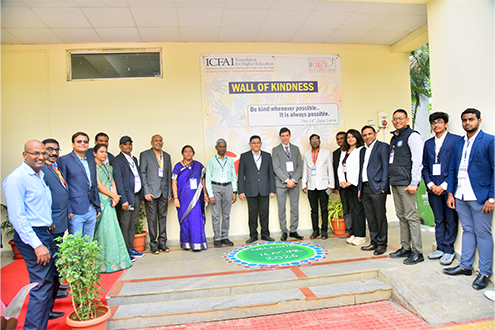
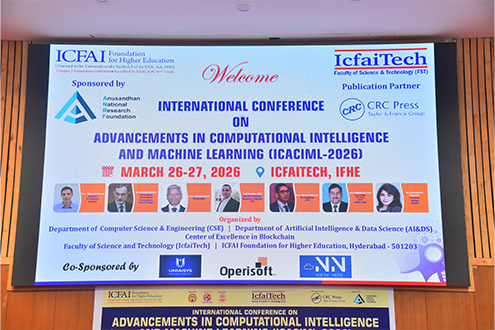
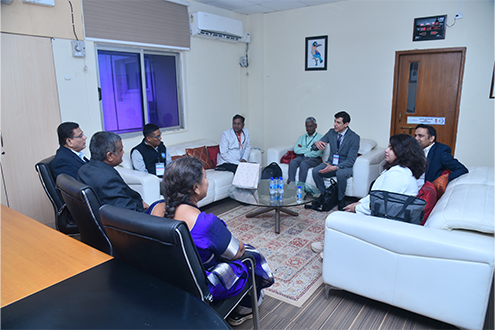
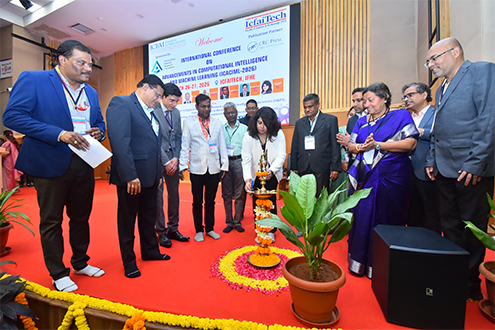
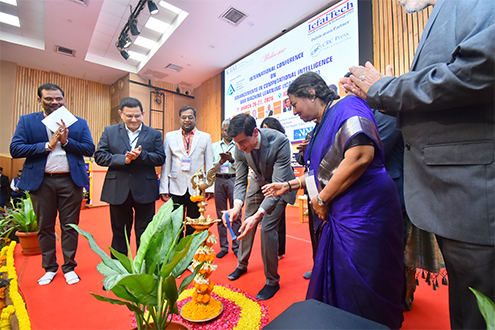
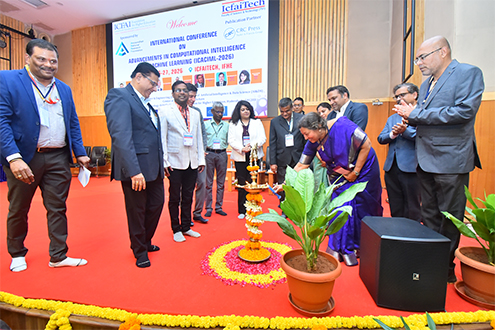
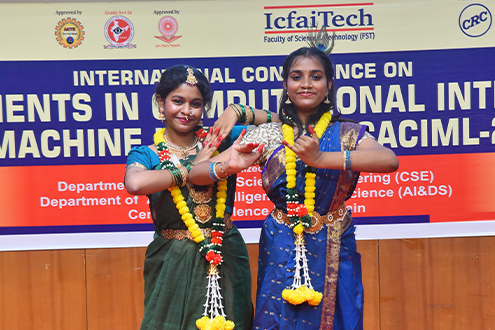
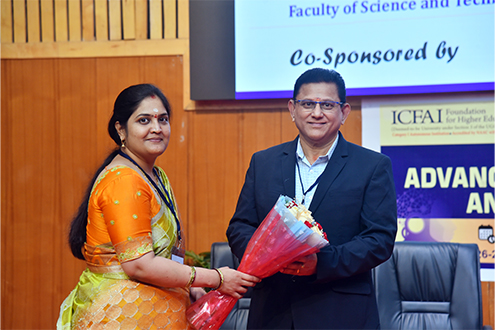
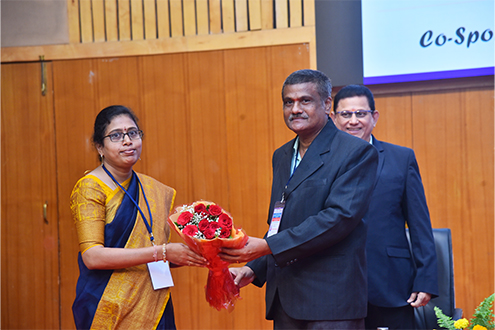
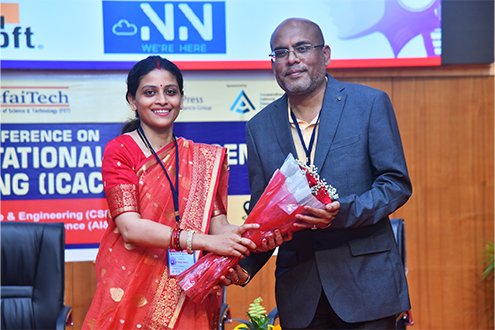
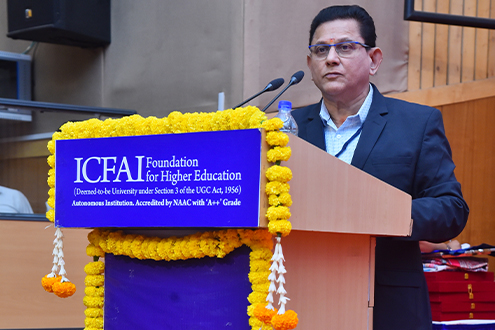
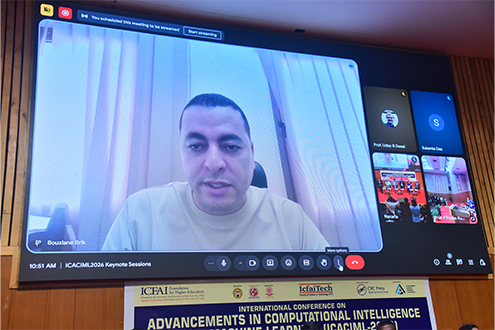
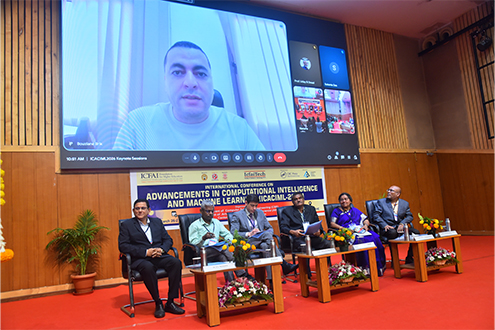
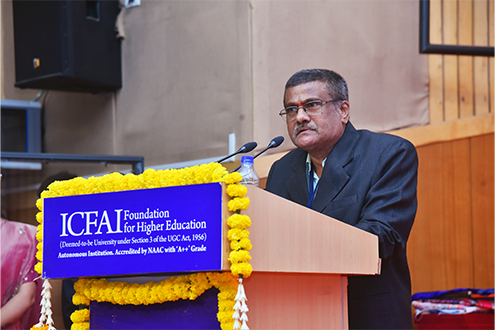
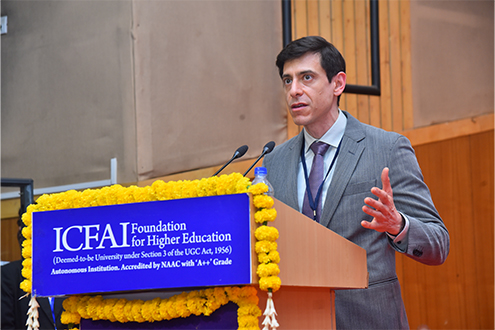
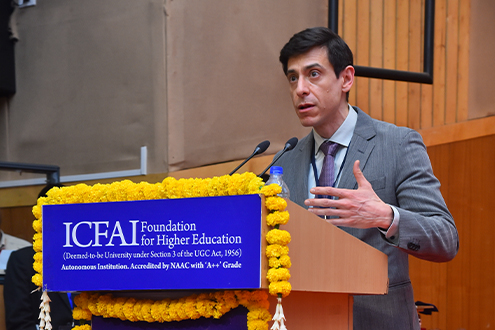
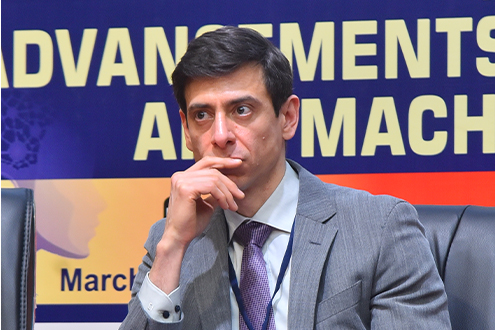
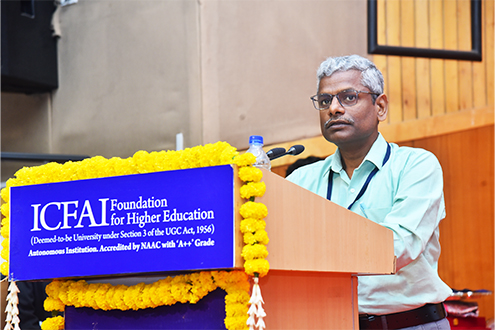
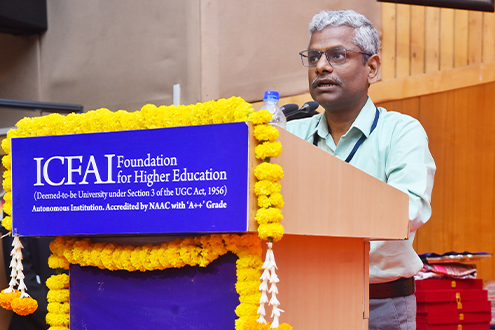
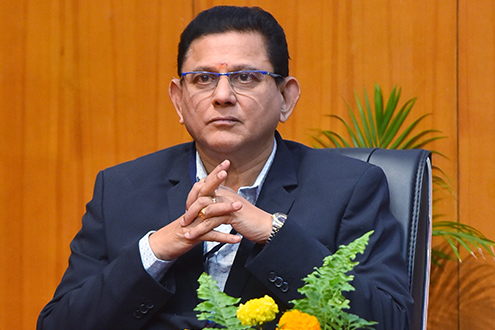
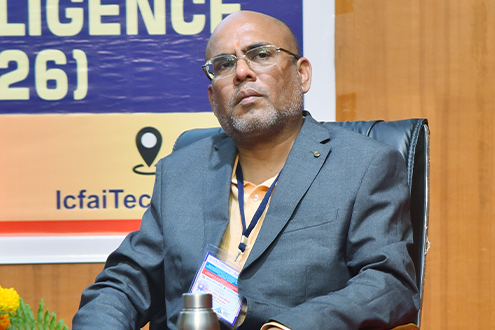
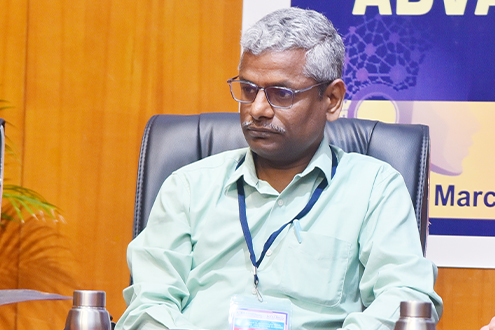
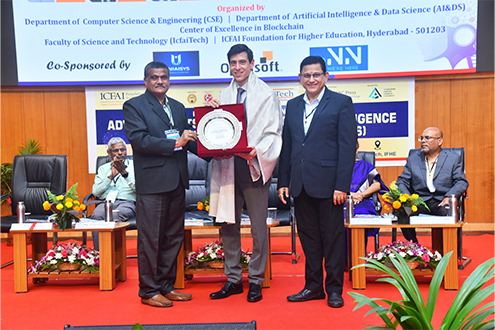
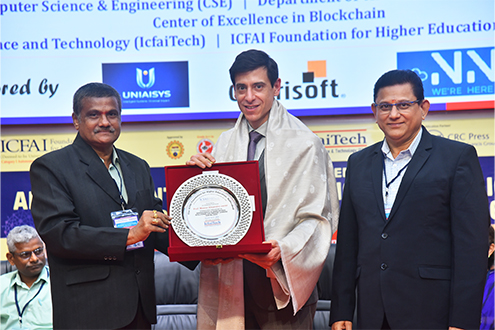
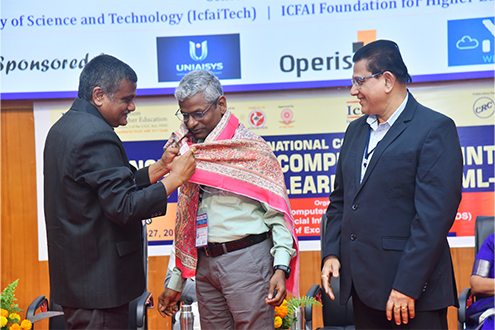
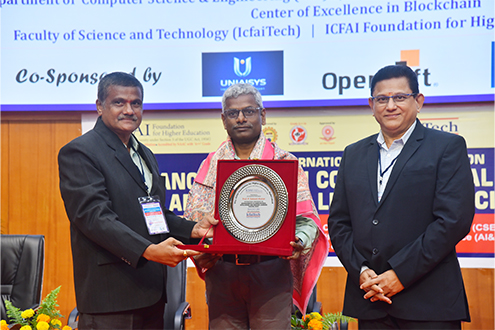
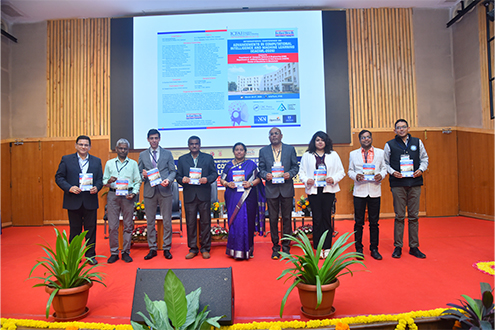
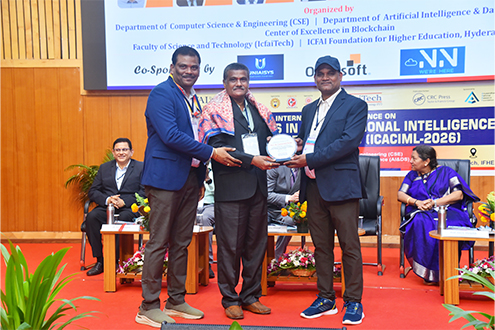
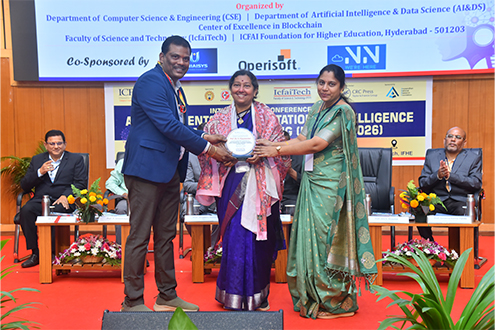
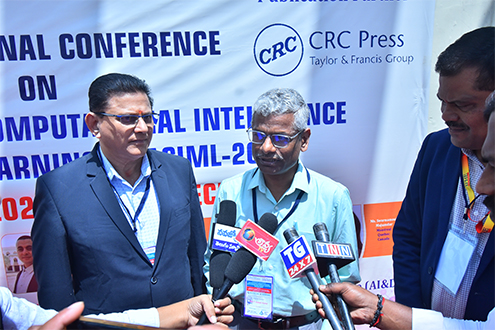
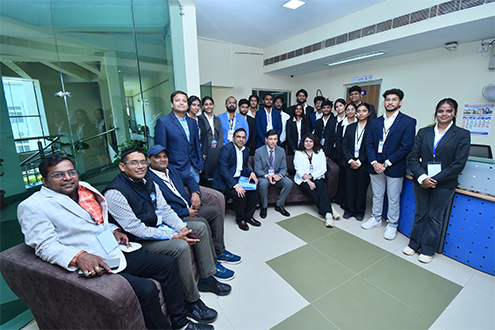
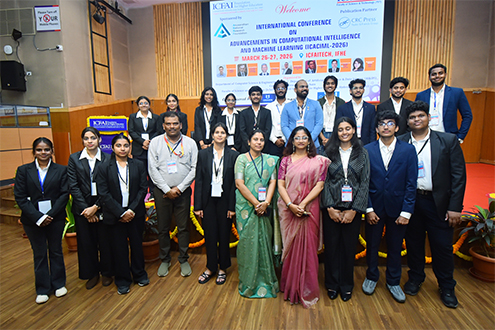
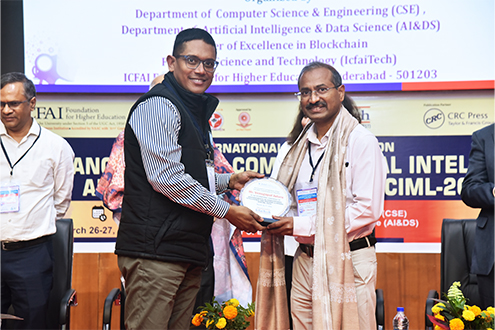
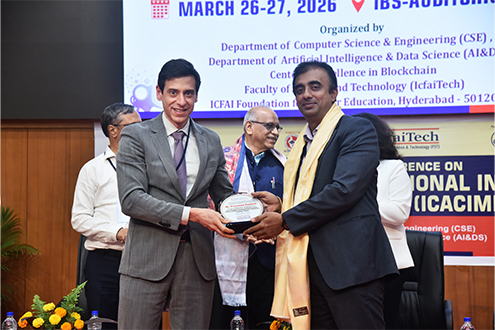
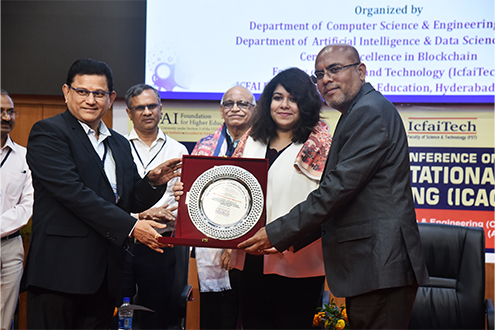
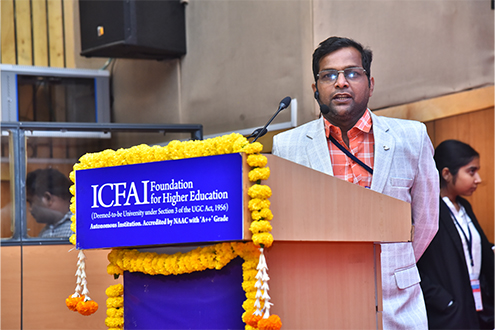
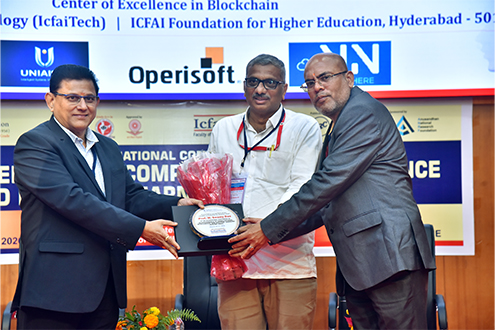
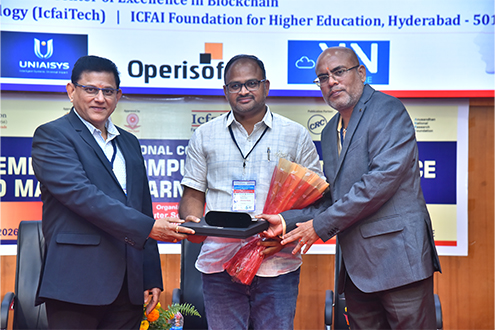
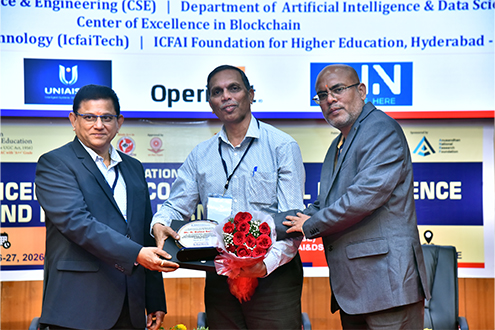
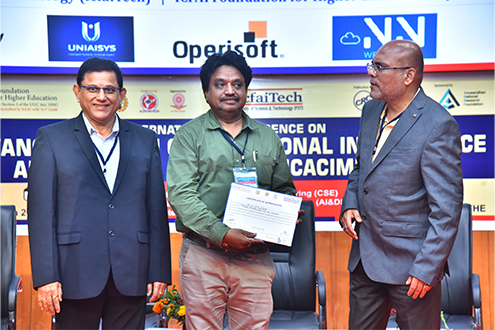
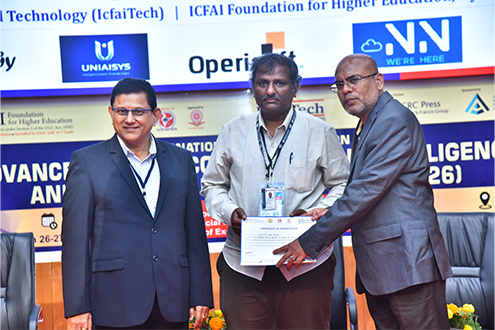
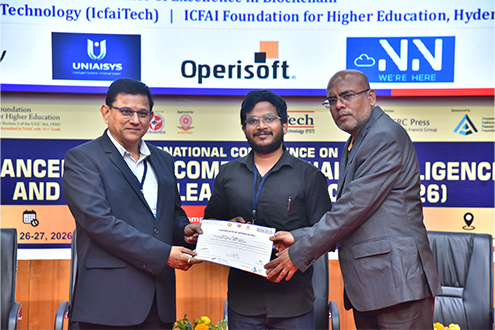
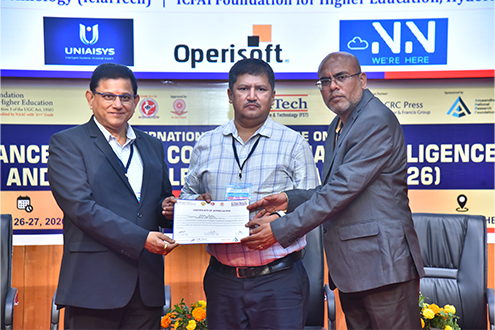
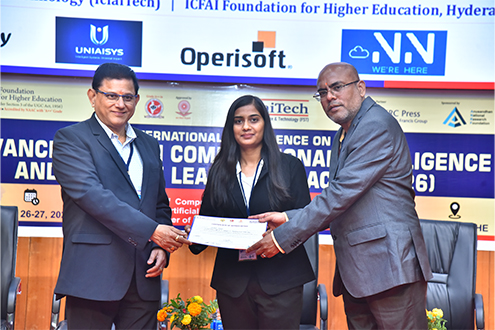
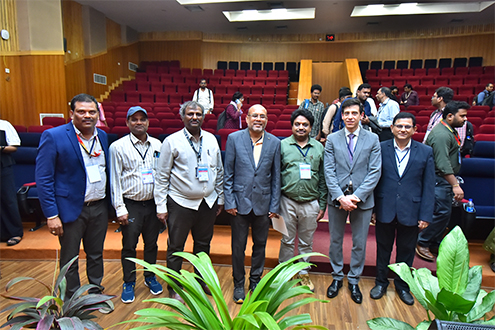
Gallery
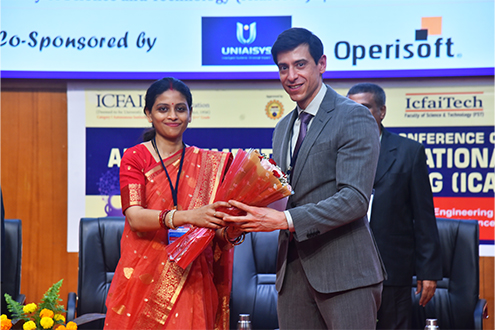
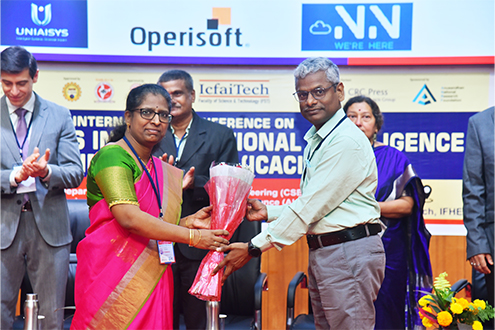
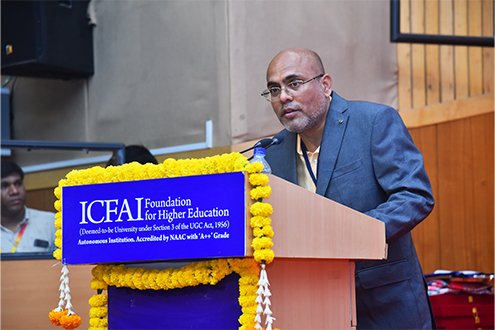
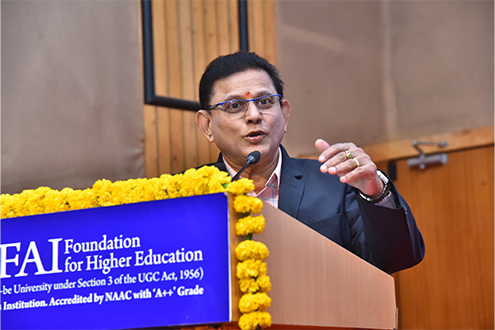
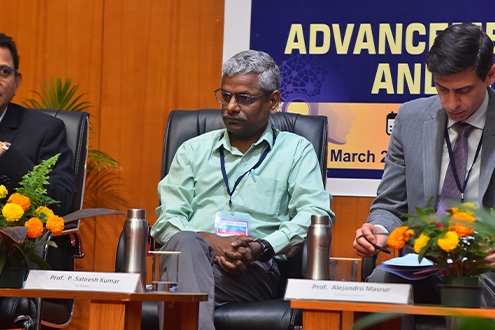
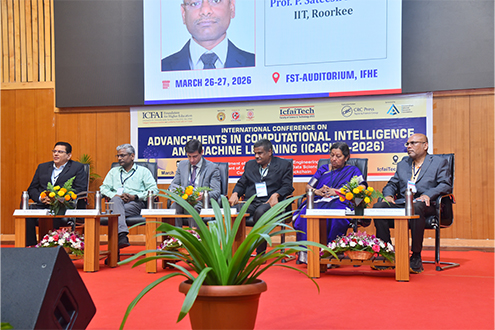
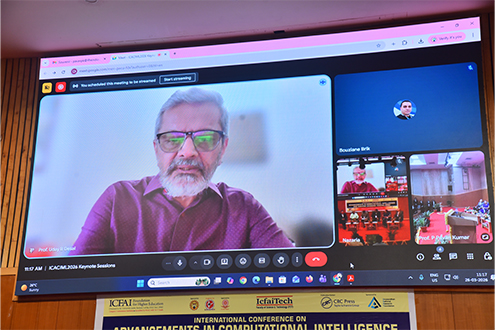
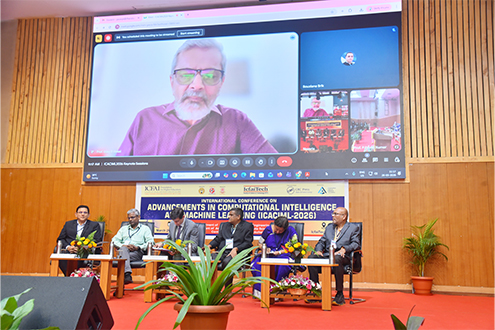
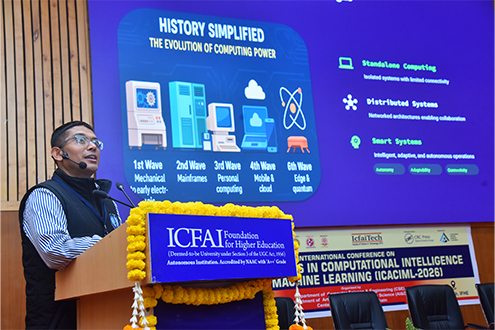
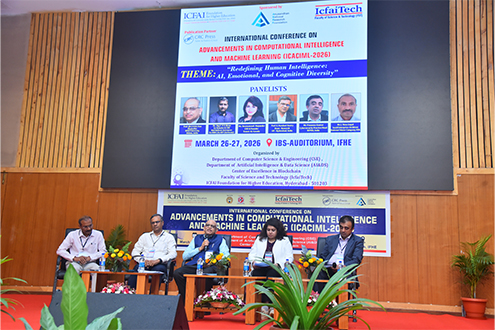
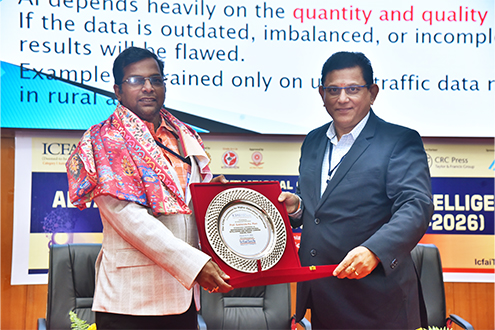
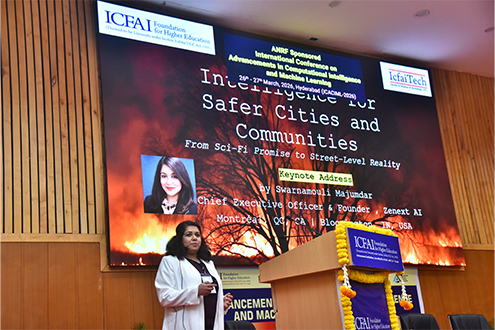
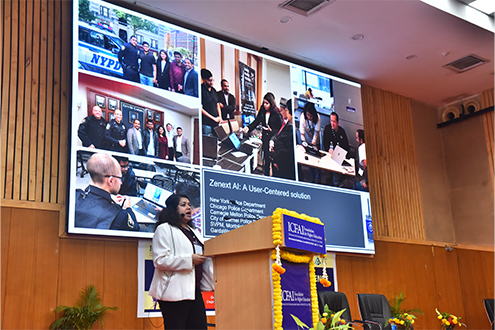
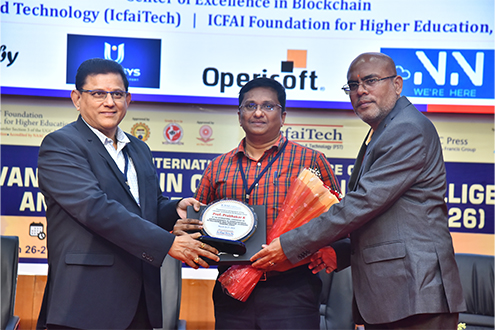
Call for Papers:
The International Conference on Advancements in Computational Intelligence and Machine Learning (ICACIML 2026) invites high-quality research contributions from academicians, researchers, industry practitioners, and scholars across the globe. The conference aims to provide a premier interdisciplinary platform for presenting cutting-edge innovations, discussing emerging trends, and addressing real-world challenges in the fields of Artificial Intelligence, Machine Learning, Data Science, and Computational Intelligence.
We welcome original, unpublished research papers, case studies, survey articles, and industry practice reports in (but not limited to) the following thematic areas:
Track 1: Machine Learning, Deep Learning & Neural Networks
- Supervised, Unsupervised, Semi-supervised learning methods
- Reinforcement Learning, Multi-agent RL, Bandits
- Probabilistic and Bayesian models
- Feature engineering, feature selection, dimensionality reduction
- Optimization methods (convex / non-convex / gradient-free / meta-optimization)
- AutoML, model selection, hyper-parameter tuning
- Explainable & interpretable ML (XAI), model auditability
- Time-series prediction, forecasting, temporal-data ML
- Scalable and efficient ML systems & large-scale deployment
- Transformer architectures, attention models, foundation models
- Convolutional Neural Networks (CNNs) and computer-vision deep learning
- Recurrent Neural Networks (RNNs), LSTM/GRU, sequence modelling
- Graph Neural Networks (GNNs) and deep learning on graphs
- Generative Models: GANs, VAEs, Diffusion Models, Generative AI
- Neural Architecture Search (NAS), Auto-DL
- Edge-AI / TinyML / on-device deep learning
- Multimodal learning (image-text, audio-text, video-text, etc.)
- Optimization techniques in deep learning: regularization, efficient training
- Responsible & trustworthy deep learning: fairness, robustness, ethics
Track 2: Natural Language Processing (NLP)
- Large Language Models (LLMs), fine-tuning, adapter methods, prompt-engineering
- Text classification, summarization, information extraction
- Question Answering, dialog systems, conversational AI, chatbots
- Machine Translation (neural MT), multilingual and low- resource languages
- Sentiment analysis, emotion detection, opinion mining
- Speech processing, speech-to-text, spoken language understanding
- Document understanding, retrieval, search, IR + NLP
- Code-mixed language processing, especially for regional languages (e.g. Indian languages)
- Ethics, bias, fairness and interpretability in NLP
- Applications of NLP in domains such as healthcare, education, law, social media
Track 3: Swarm & Evolutionary Computation
- Genetic Algorithms (GA), Genetic Programming (GP), Evolutionary Strategies
- Particle Swarm Optimization (PSO), Ant Colony Optimization, Bee/Firefly/Other Swarm methods
- Hybrid algorithms: combining evolutionary / swarm methods with ML / DL techniques
- Multi-objective optimization, Pareto-optimal solutions, trade-offs
- Evolutionary Game Theory, multi-agent optimization, co- evolution
- Bio-inspired and nature-inspired computing / optimization
- Swarm robotics, distributed intelligence, self-organizing systems
- Heuristics and metaheuristics for real-world problems (optimization, scheduling, resource allocation, IoT, network optimization)
- Benchmarking, performance evaluation, comparative studies of evolutionary methods
Track 4: ML for Cybersecurity, Healthcare & Emerging Applications
A . ML for Cybersecurity
- Intrusion detection, anomaly detection, network security using ML
- Malware, ransomware, phishing detection and prevention using ML/DL
- Adversarial ML, robustness, secure ML models
- Privacy-preserving ML: federated learning, secure ML, privacy-enhancing tech (e.g. differential privacy, ZKPs)
- Blockchain + ML / Hybrid security-ML frameworks
B. ML for Healthcare & Biomedical Applications
- Medical image analysis (X-Ray, MRI, CT, ultrasound) using ML/DL
- Predictive healthcare analytics, risk scoring, prognosis models
- Remote monitoring via wearables, IoT-based health monitoring, time-series health data
- Clinical decision support systems, diagnostic assistance, prognosis, disease detection
- Drug discovery, genomics / bioinformatics, computational biology using ML
- Explainable & interpretable ML in healthcare decisions (transparency, ethics)
C. ML in Other Emerging Domains & Cross-Cutting Applications
- AI / ML for Smart Cities, IoT-enabled systems, transportation, logistics
- ML for environment, climate modelling, sustainability, resource optimization
- ML in FinTech, fraud detection, financial forecasting
- ML for education: learning analytics, adaptive learning, assessment & evaluation
- AI governance, ethics, policy, fairness, societal impact of ML
Track 5: AI-Driven Business Transformation: Analytics, Digital Innovation, and Sustainable Management Practices
- Predictive Business Analytics & Decision Intelligence
- Digital Transformation, Industry 4.0 & Innovation Management
- FinTech, Risk Analytics & Blockchain Applications
- Marketing Analytics, Consumer Insights & Social Media Mining
- Human Resource Analytics & Future of Work Models
- Healthcare Analytics & Digital Health Systems
- Sustainability, ESG Analytics & Green AI
- AI Governance, Ethics & Policy in Management
Track 6: Intelligent IoT for Smart Manufacturing
- Low-power embedded system design for industrial IoT devices
- Advanced MEMS/NEMS sensors for manufacturing applications
- VLSI and ASIC architectures for high-speed IIoT data processing
- Edge AI hardware accelerators for factory automation
- 5G/6G-enabled real-time communication for manufacturing systems
- Hardware-level cybersecurity for IIoT devices (PUF, secure boot, TPM)
- IoT-enabled robotics control hardware and sensor fusion platforms
- Robust hardware design for extreme temperature and vibration environments
Publication Opportunities
All accepted and presented papers will be included in the Conference Proceedings of ICACIML 2026, to be published in the distinguished 'Information System and Data Analytics' series by CRC Press, Taylor & Francis Group, edited by Subhendu Pani.

Additional publication avenues
Selected and extended versions of high-quality papers presented at ICACIML-2026, after undergoing a rigorous peer-review process, will be considered for publication in the journal Recent Patents on Engineering (Bentham Science), which is indexed in Scopus.

Author Instructions
Paper Template
ICACIML-2026 Review Policy
At the International Conference on Advancements in Computational Intelligence and Machine Learning (ICACIML-2026), we are committed to upholding the highest standards of integrity, quality, and transparency in our review process. Every submission is evaluated with fairness, rigor, and strict adherence to ethical practices.
- Evaluation Criteria Submissions are assessed based on scholarly merit, originality, alignment with conference themes, and compliance with submission guidelines and industry standards.
-
Expert Review
Papers are reviewed by subject-matter experts possessing relevant domain expertise. -
Double-Blind Peer Review
ICACIML-2026 adopts a double-blind review process where the identities of both authors and reviewers remain confidential. -
Confidentiality
Reviewers and editors are prohibited from sharing or discussing submissions outside the review process. This safeguards unpublished ideas and results. -
Conflict of Interest
Any identified conflict of interest will result in reassignment of the submission to an alternate reviewer to maintain impartiality. -
Ethical Responsibility
Reviewers must report suspected cases of plagiarism, conflicts of interest, or undisclosed funding sources. Such cases will be escalated to the conference’s ethics committee. -
Review Panel
Each paper will be evaluated by three independent reviewers. Consolidated reviewer feedback will form the basis of the final decision. -
Timeliness
Reviewers are expected to meet deadlines, ensuring a timely and efficient review process without compromising feedback quality. -
Decision Process
Acceptance is based on the consensus of three reviewers. In cases of conflicting reviews, an additional expert opinion will be sought. -
Plagiarism & Similarity Check
The similarity index must not exceed 15% in total, with no single source contributing more than 5%. Submissions failing these criteria will not advance to the review stage.
Important Information: |
|
| Submission Deadline: | 6th February, 2026 |
| Acceptance Notification | 10th February, 2026 |
| Registration | 15th February, 2026 |
| Camera Ready Paper Submission | 20th February, 2026 |
| Conference Dates: | 26th - 27th March, 2026 |
| Conference Venue: | ICFAITECH - Hyderabad, Telangana, India |
| Paper Submission Link: | icaciml2026@ifheindia.org |
| Paper Format: | Papers must be prepared in as per the format. Paper template (PDF/Word). |
Committees:
Chief Patron:
Prof. Tamma Koti Reddy, Vice-Chancellor (Incharge), IFHE, Hyderabad
Patron:
Dr. S. Vijayalakshmi, Registrar, IFHE, Hyderabad.
Dr. K. L. Narayana, Director, IcfaiTech, IFHE, Hyderabad.
Advisory Committee:
Prof. U. B. Desai, Advisor, IFHE, Hyderabad
Dr. J. Mahendar Reddy, Advisor, ICFAI Group
Dr. O. R. S. Rao , Advisor, ICFAI Group
Prof. Arun K Pujari, Advisor & Professor Emeritus
Dr. Ashok Kumar Das, IIIT Hyderabad
Prof. Rashmi Ranjan Rout , NIT Warangal
Prof. Ch Sudhakar, NIT Warangal
Prof. A. Ananda Rao , JNTU, Ananthapur
Prof. K C Santosh, University of South Dakota
Prof. R B V Subrahmanyam, NIT Warangal
Prof. S.Nagender Kumar, University of Hyderabad
Prof. C. Krishna Mohan, IIT Hyderabad
Prof. Chandrasekaran K, NITK Surathkal
Prof. R. Balasubramanian, IIT Roorkee
Prof. Vincenzo Piuri, University of Milan, Italy
Prof. Vijayakumar Varadarajan, The University of New South Wales, Sydney, Australia
Prof. Sanjeev Arora, Princeton University, US
Prof. Divya Midhunchakkaravarthy, Lincoln University College, Malaysia
Prof. Viraj Kumar, IISc Bangalore
Prof. Praveen Kumar Donta, Stockholm University, Sweden
Prof. Muhammad Ijaz Khan, Prince Mohammad Bin Fahd University, KSA
Prof. Durga Prasad Mohapatra, NIT Rourkela
Prof. Bernard De Baets, Ghent University, Belgium
Prof. Humaira Nisar, UTAR, Malaysia
Prof. Aditya Trivedi, ABV-IIITM, Gwalior
Prof. K. V. Arya, ABV-IIITM, Gwalior
Prof. S. Mary Saira Bhanu, NIT Tiruchirappalli
Prof. N. Ramsubramanian, NIT Tiruchirappalli
Prof. D V L N Somayajulu, NIT Manipur
Prof. Kentaro Inui, Tohoku University, Japan
Prof. Joonseok Lee, SNU, South Korea
Prof. Wen-Syan Li, SNU, South Korea
Prof. Hyojin Sung, SNU, South Korea
Prof. Khaled Ben Letaief, HKUST, Hongkong
Prof. Brahim Bensaou, HKUST, Hongkong
Prof. Poddoju Sateesh Kumar, IIT, Roorkee
Steering Committee Chair:
Dr. Sandeep Kumar Panda, Professor, IcfaiTech, IFHE, Hyderabad
General Chairs:
Dr. P. Pavan Kumar, HoD, Dept. of AI&DS, IcfaiTech, IFHE, Hyderabad
Dr. P. Rohini , HoD, Dept. of CSE, IcfaiTech, IFHE, Hyderabad
Publication Chair:
Dr. Pradosh Kumar G, Dept. of AI&DS, IcfaiTech, IFHE, Hyderabad
Technical Committee:
Dr. Asisa Kumar Panigrahy
Dr. K. Adi Narayana Reddy
Dr. Kuncham Sreenivasa Rao
Dr. L. Lakshmi
Dr. A. Sree Lakshmi
Dr. Kotari Sridevi
Dr. Srinivasu Badugu
Dr. Nafis Uddin Khan
Dr. B. Deevena Raju
Dr. B. Seetharamulu
Dr. Srinivasa Rao Kongara
Dr. D. Srinivasa Rao
Dr. Santosh Kumar Sahoo
Dr. Sukantha Das
Dr. Kaushik Midya
| S. No. | Chair |
| 1 | Dr. PRABHAKAR KANDUKURI |
| 2 | Dr. M Swamy Das |
| 3 | Dr. A. Srinivas Reddy |
| 4 | Mr. N RATNA SEKHAR |
| 5 | Dr. Raghunandan Swain |
| 6 | Dr. E Sudarshan |
| 7 | Dr. M Suresh, |
| 8 | Dr C. Shoba Bindu |
| 9 | Dr. Fahmina Taranum |
| 10 | Dr. P S Latha Kalyampudi |
| 11 | Dr. Amrutanshu Panigrahi |
| 12 | Dr. O. Sri Nagesh |
| 13 | Dr Bibhu Prasad Sahu |
| 14 | Dr. Tejinder Kaur |
| 15 | Dr P.Chiranjeevi |
| 16 | Dr Vasavi Bande |
Sponsors

Co-Sponsors



Registration:
To encourage wider participation, the conference registration fee will be charged as given below:
| Participation Category | Registration Fee (USD) | Registration Fee (INR) |
|---|---|---|
| Academicians | 150 | 10,000 |
| Research Scholars / Students | 100 | 8,000 |
| Participation Fee (Non-presenting Authors / Others) | 100 | 5,000 |
| Corporate Delegates / Policy Makers / Govt. Officials / NGO Professionals | 150 | 10,000 |
| Additional Pages(Per Page) | 25 | 1,000 |
*An additional 18% GST will be applied to the registration fee mentioned above.
Accommodation
A limited number of rooms may be available at nominal rates on the campus of IFHE-Hyderabad. The rooms will be allocated on first-come-first served basis. For any queries, please contact us at info_icaciml2026@ifheindia.org.
Keynote Speakers
-Ing- Alejandro-Masrur-ICACIML-2026.jpg)
Prof. (Dr) Ing. Alejandro Masrur
TU Chemnitz, Germany

Prof. Fernando Moreira
Porto, Portugal

Swarnamouli Majumdar
Montreal, Quebec, Canada
-P-Sateesh-Kumar-ICACIML-2026.jpg)
Prof. (Dr) P. Sateesh Kumar
IIT, Roorkee
-Diptendu-Sinha-Roy-ICACIML-2026.jpg)
Prof. (Dr) Diptendu Sinha Roy
NIT, Meghalaya
-Bouziane-Brik.jpg)
Prof. (Dr) Bouziane Brik
University of Sharjah, UAE
-Subhendu-Ku-Pani-ICACIML-2026.jpg)
Prof. (Dr) Subhendu Ku. Pani
BPUT, Odisha
Conference Venue:
ICFAITECH - Hyderabad Donthanapally,
Shankarapalli Road
Hyderabad - 501203, Telangana, India.